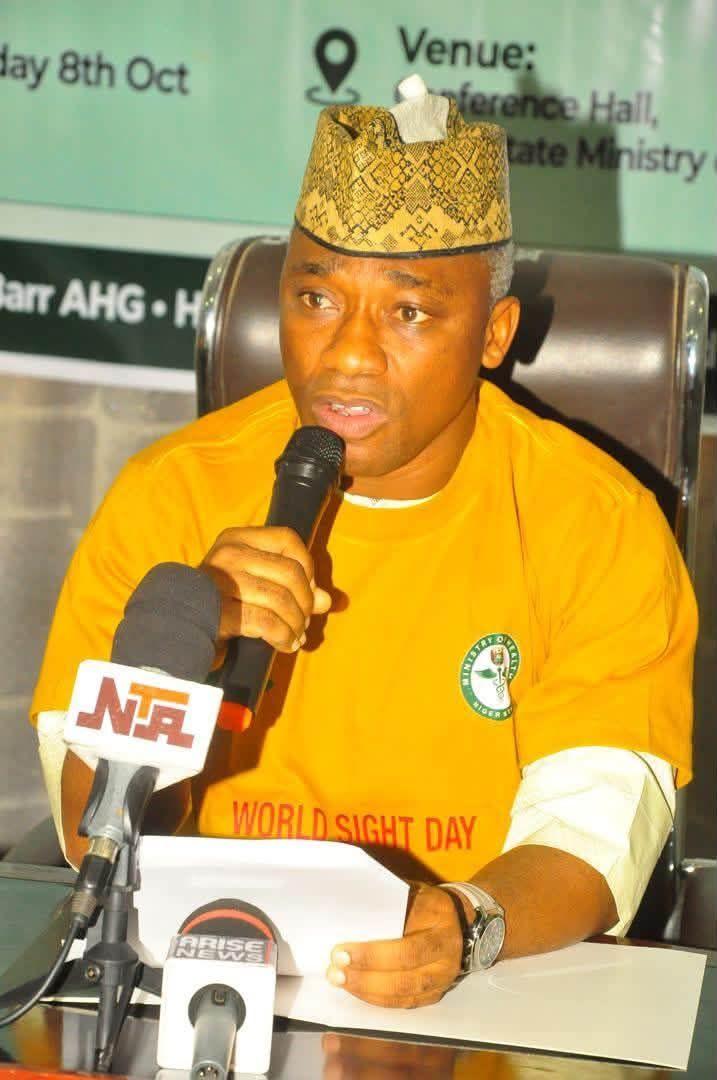
The Niger State Government says it is targeting more than 1,000 beneficiaries for free cataract surgery by the end of 2026 as part of efforts to prevent avoidable blindness in the state.
The State Commissioner for Health, Dr Murtala Muhammad Bagana, disclosed this during a press briefing to mark the 2026 World Sight Day.
He said the state would provide free cataract surgery to another 50 residents under the intervention, bringing the number of beneficiaries to more than 400.
The programme is being implemented through the Niger State Eye Health Programme in collaboration with the Ministry of Health and relevant professional and community organisations.
This year’s World Sight Day is being commemorated under the theme, “Love Your Eyes,” with the sub-theme, “Protect Your Eyes, See Clearly, Live Fully.”
Bagana said the theme highlights the importance of preventing eye diseases, detecting them early and providing timely treatment to reduce the risk of permanent vision loss.
He expressed concern over residents who suffer avoidable blindness because they cannot afford treatment or delay seeking medical attention.
“As a government, we are committed to ensuring that avoidable blindness becomes a thing of the past in Niger State. We want our people to see clearly so they can live productive lives and contribute meaningfully to the socio-economic development of the state,” he said.
Beyond cataract surgeries, the commissioner said the intervention would provide comprehensive eye screening, treatment for non-surgical eye conditions, 200 free reading glasses and counselling on proper eye care and hygiene.
He urged residents to take advantage of the free screening and treatment exercise scheduled to hold at the Eye Centre, General Hospital Minna, between 9:00 a.m. and 2:00 p.m.
The commissioner also advised residents experiencing eye problems, particularly those who had previously undergone screening, to remain in contact with appropriate health facilities for further assessment and treatment.
He called on the media to intensify public awareness campaigns on eye health, noting that ignorance, poverty and delayed presentation at health facilities continued to increase the risk of avoidable blindness.
Bagana commended the programme’s partners, including the OSN, NOA, NONA and ANDO Niger State chapters, the Hospitals Management Board, the management of General Hospital Minna and other individuals supporting the initiative.
He reaffirmed the state government’s commitment to strengthening partnerships to expand access to quality healthcare, describing eye care as an investment in the productivity and future of Niger State.
World Sight Day: Niger Targets 1,000 Free Cataract Surgeries by Year-End
A
BY Aisha Muhammed kuduPublished October 9, 2026